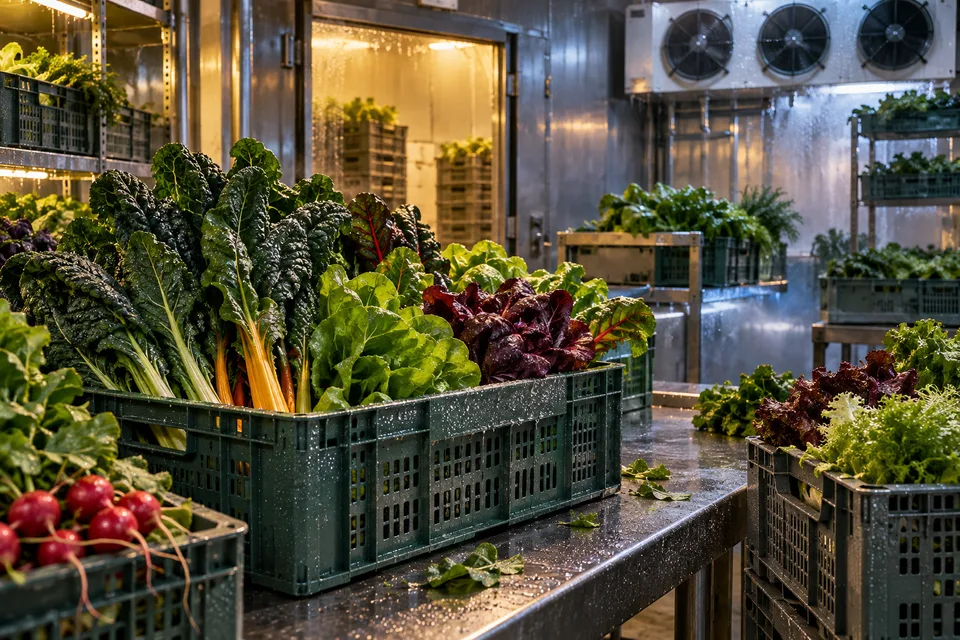
The diner is not always the person who chooses what gets bought. In a school, the meal on the tray can originate in a decision made months earlier by a public purchaser. An ingredient specification, contract structure and delivery schedule help decide which foods arrive, which suppliers can compete and what the kitchen can serve.
That makes public food procurement a form of food-system design. A recurring institutional order can offer a market different from the uncertain next customer at a stall. It can support production planning and connect a public service to nearby farms. But the opportunity becomes real only when the arrangement works at both ends: a producer can supply it, and children receive a meal worth eating.
FAO’s inclusive procurement framework for schools describes this connection through home-grown school feeding. It emphasizes both enabling policies and changes on the demand side that allow smaller and vulnerable producers to participate. The idea is not simply to direct an existing tender toward an appealing origin story. The way the buyer buys may need to change.
To see why, read a hypothetical lunch backward. Begin with the food eaten, then examine the kitchen, delivery, specification and farm. This is an analytical journey, not an account of a particular school. At each stage, the apparently simple instruction to purchase better food becomes a question about capacity and responsibility.
The last metre: the meal has to reach the child
A compliant delivery and a nutritionally planned menu are important achievements. They are not the same as a child eating the intended meal. A lunch can meet the paper specification and still encounter an unsuitable serving environment, insufficient time or a dish pupils do not understand or enjoy.
Finland’s school-meal framework places lunch within education and student welfare, with pupil participation and a calm, unhurried break. Its perspective is useful beyond the country’s particular arrangements: food provision includes the setting in which people receive it. The lunch period is part of the service, rather than a gap between lessons where eating happens automatically.
The Finnish agency’s September 2026 guidance also addresses meals on excursions and special days, alongside the ordinary school timetable. A program needs to function when the day changes. An entitlement that disappears during a trip or leaves a pupil with unsuitable food has not been implemented evenly.
Feedback should therefore reach the people planning the service. If a dish is routinely left uneaten, the response needs to investigate portioning, preparation, familiarity, timing and other possible causes. Simply deleting a nutritious ingredient or blaming pupils can leave the underlying problem unresolved. The objective is a good meal actually received, not a flawless menu document.
There are individual requirements too. Allergies and other dietary needs call for appropriate procedures and coordination, not an improvised substitution at the serving counter. A procurement decision that increases variety must remain connected to the staff and information needed to manage it. Diversity on a tender is useful only when the kitchen can translate it into suitable meals.
For evaluation, this suggests several observations rather than one procurement percentage. Participation, meal quality, service reliability and waste answer different questions. A growing share purchased from a preferred supplier group can be valuable without proving every other part of the program has improved at the same time.
One step back: what can the kitchen do with the delivery?
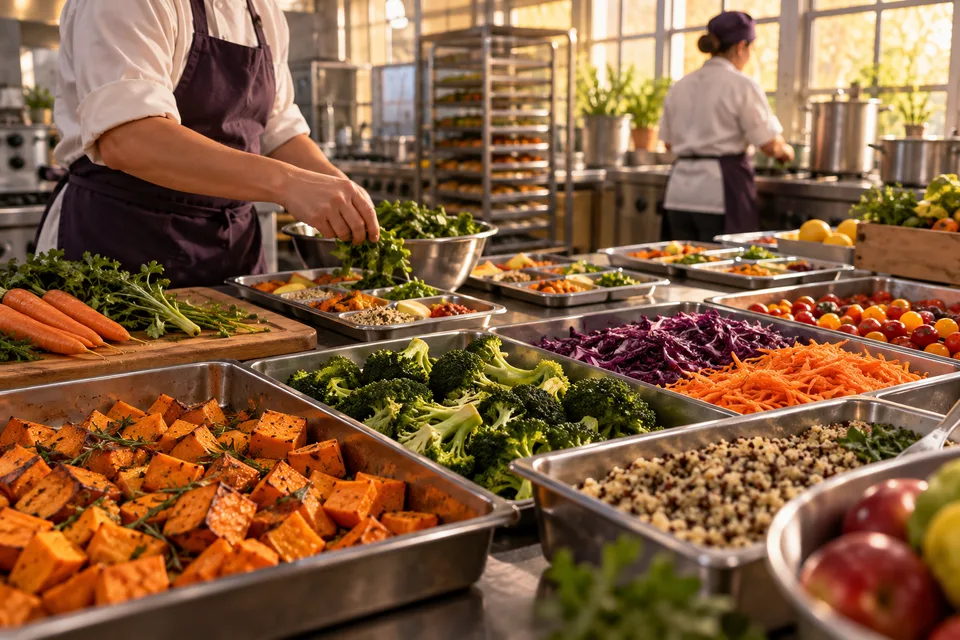
The kitchen is the point where an agricultural opportunity becomes a practical meal. Fresh ingredients may require washing, preparation, storage and staff time. A delivery suited to one facility can be burdensome for another. Procurement that ignores those differences risks buying food that the service cannot use well.
Equipment matters, but so do maintenance, energy, water and training. Installing a new cooking appliance can help; reliable operation requires a suitable supply and people able to use it. A purchaser should know whether a proposed menu fits the kitchen’s daily working capacity, not only whether equipment appears on an inventory.
The World Food Programme’s September 2026 terms of reference for a regional evaluation describe three connected pathways in the THRIVE phase-II project: agricultural production, meal quality and clean cooking. The page concerns an evaluation plan for work running from 2025 to 2027, not completed findings. Its design recognizes that these parts belong in the same account.
This connection makes the labor budget important. A shift toward ingredients needing more preparation can change the workload. If the food budget improves while staffing stays unsuitable, kitchen workers may have to absorb the gap. Their effort is not an unlimited resource supplied free with a healthier purchasing policy.
Menus should therefore be developed with the people who cook them. They can identify what arrives in a usable form, which substitutions are workable and how much preparation fits the day. Procurement professionals, nutrition specialists and kitchen staff have different expertise; the program needs their decisions to meet before a delivery becomes an urgent problem.
There is room for iteration. A buyer can introduce an ingredient in a planned way, observe the preparation and response, and adjust the specification. A new contract does not need to begin with the most complicated possible menu. The aim is to make a better service repeatable.
Further back: the schedule is part of the food
A school is a customer with a calendar. Weekdays, terms, holidays and occasional closures shape demand. A farmer is a supplier with another calendar, governed partly by growing seasons and harvest conditions. The procurement arrangement has to connect them.
A fixed order for identical quantities throughout the year may be easy to administer while difficult for seasonal producers to fulfill. Suitable menu flexibility can help, provided nutritional and service requirements remain clear. The buyer needs a way to accommodate appropriate changes rather than leave each school to negotiate under pressure.
Delivery scale can exclude a producer as effectively as price. A small farm might supply a local collection point but be unable to deliver separate small orders to many schools. Aggregation or a cooperative arrangement can make participation possible, although those services require management and money. Calling the chain local does not pay for its distribution.
The quantity arriving also has to fit storage and use. A large delivery can reduce transport trips while overwhelming a small kitchen. Several smaller deliveries can be more manageable but more expensive to coordinate. The better choice depends on the food and facilities rather than a universal instruction to consolidate or decentralize everything.
School closures and crop shortfalls need agreed responses. Who communicates a changed requirement? What happens to produce already prepared for delivery? How is a suitable alternative obtained? Planning these questions is more constructive than waiting for the first disruption and deciding that local sourcing is unreliable.
Reliability does not mean denying agricultural variability. It means creating an arrangement capable of handling it. A contract that allows no workable response to ordinary seasonal differences can turn a predictable management task into a supplier failure.
The document that decides who can enter
A tender or purchasing process defines the route into the market. Large combined contracts, demanding documentation or slow administrative procedures may be manageable for an established distributor and difficult for a small producer. Equal wording does not always create equal access.
Brazil provides a concrete example of a public program explicitly directing part of its demand toward family farming. Law 15,226 of September 2025 raised the minimum share to 45% of the federal resources transferred by FNDE within the National School Feeding Programme, with that change taking effect on 1 January 2026. The denominator matters: this is not a statement that 45% of every school’s entire operating budget must become farm purchases.
FNDE’s 2026 explanation of family-farming procurement describes the public-call mechanism and documentation for different kinds of suppliers. The policy creates a route for participation while retaining requirements relevant to the food and supplier. Announcing a percentage and implementing the purchasing process are separate pieces of work.
The broader lesson is about procurement design, not importing another country’s legislation. If a program wants smaller farms to supply it, its mechanism needs to make that possible. Suitable contract sizes, clear information and assistance with participation can matter as much as a favorable statement at the top of the policy.
Standards should remain meaningful. Inclusion does not require ignoring food safety or accepting unsuitable deliveries. It requires identifying how qualified producers can meet appropriate requirements, and which support would help. Otherwise a program can proclaim access while expecting suppliers to navigate a system built for much larger businesses.
Selection also needs transparency. A local relationship can be useful, but it should not become an unexplained preference for a familiar supplier. Public purchasing serves a public service and uses public resources. Clear criteria and accountability help sustain trust in the arrangement.
At the farm: predictable demand is valuable when payment is predictable too
A recurring order can help a grower plan. It can also expose the grower to a demanding customer whose administrative timetable differs from the farm’s cash needs. The benefit depends on the whole commercial relationship, not only the award of a contract.
Imagine a producer who spends money on labor and delivery now but waits much longer than expected for payment. The order may be profitable on paper while creating a serious cash problem. The figures need not be dramatic for the problem to matter: a small business can have less room to bridge the delay.
Prompt, understandable payment procedures are therefore part of inclusive procurement. The supplier needs to know what documentation is required, who confirms a delivery and how disputes are resolved. A program that offers market access but cannot administer payment reliably is passing its weakness to the people it intends to support.
The stability of demand needs an honest description as well. A school contract can reduce one uncertainty without eliminating weather, input costs or production risks. Farmers should not be encouraged to make investments on the assumption that a temporary program is a permanent guarantee. The order’s duration and conditions belong in the planning conversation.
WFP’s May 2026 announcement of a new Eastern African school-meals partnership sets out intended support for children and smallholders over five years. Those are program ambitions at announcement, not verified final outcomes. Reporting should follow whether the planned market becomes dependable participation and income for the intended producers.
Even a supplier count needs interpretation. WFP’s 2026 indicator for farmers supplying schools measures participation in provision. It does not by itself establish how much each farmer earns or how stable the relationship is. A useful evaluation can ask those additional questions without dismissing participation as an achievement.
Read forward again
Read the purchase forward one last time: the farmer paid, the delivery received, the kitchen equipped and the meal offered in a form children can use. Each stage can undo the intention written into a good specification. Repeated school demand is powerful because it can make those arrangements dependable, season after season. The public purchaser’s task is to sustain the chain, then look at the tray and listen to the people expected to eat from it.
Sources & context
This article draws on the sources linked in the text. Analysis and illustrative scenarios are identified separately from reported findings.
- inclusive procurement framework for schools
- school-meal framework
- September 2026 guidance
- September 2026 terms of reference for a regional evaluation
- Law 15,226 of September 2025
- 2026 explanation of family-farming procurement
- May 2026 announcement of a new Eastern African school-meals partnership
- 2026 indicator for farmers supplying schools